
ATMOSFAR Map and Regions: Tycos and the Sky Layers
How the ATMOSFAR map works: the floating layers of Tycos, where Caligo Cays sits, what Early Access includes and how to navigate without a full map.
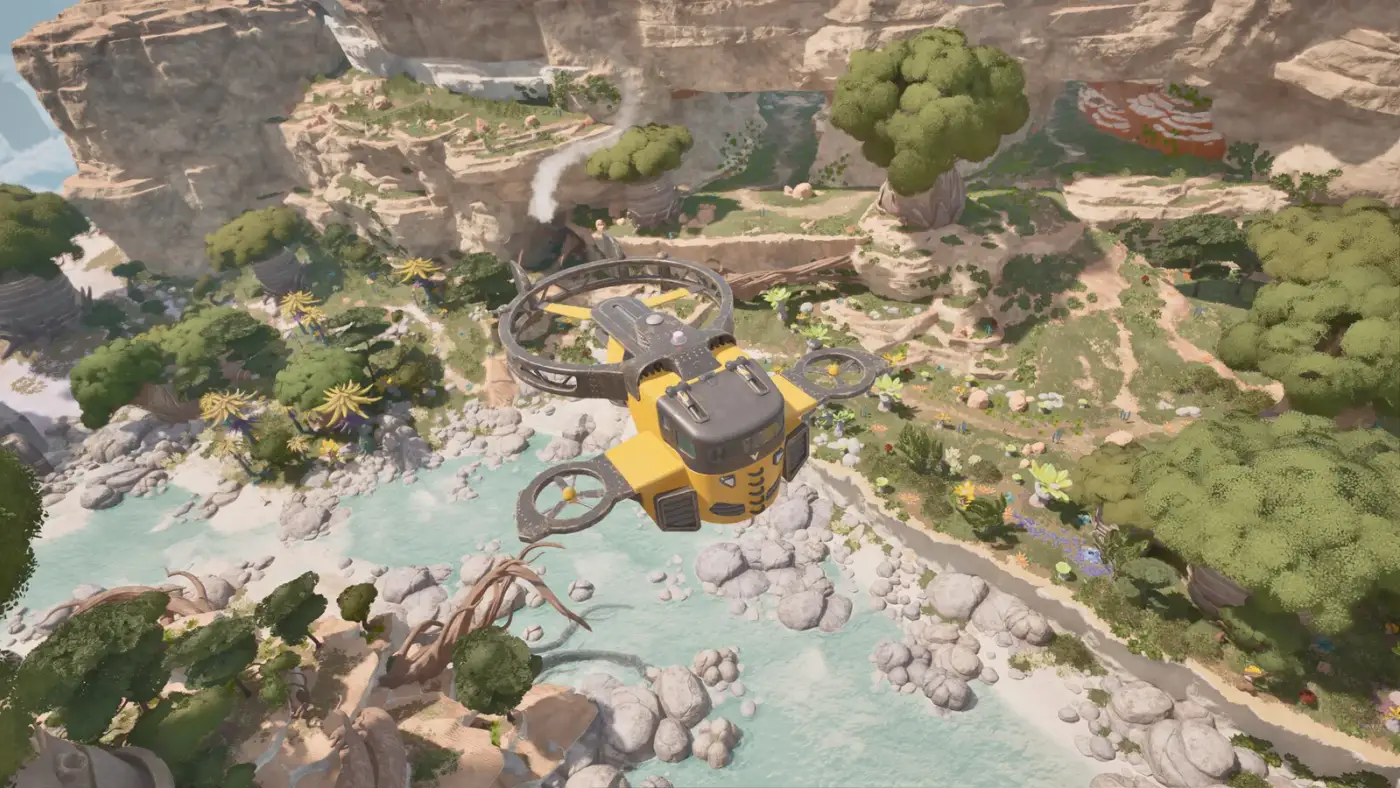
ATMOSFAR takes place on Tycos, a world of floating islands stacked in layers. Early Access launches with two regions, starting in the rainy lower layer called Caligo Cays. A third region, Rime, arrives in a later update.
ATMOSFAR's map is vertical. Instead of a continent with borders, Tycos is a stack of island layers separated by open sky, clouds and weather. Understanding that structure is the key to navigation, resource planning and knowing why your first flight felt so disorienting.
The three layers of Tycos
The development blogs describe three broad layers, defined by altitude and climate.
| Layer | Character | Resources | Launch status |
|---|---|---|---|
| Lower | Wet, lush, giant trees, fungi, rain | Wood, fruit, berries, dense life | Playable — Caligo Cays |
| Middle | Drier plains, rock, caves, PACE ruins | Scrap, PACE facilities, crystals | Part of the launch regions |
| Upper | Cold, barren, crystal, thin air | Rare materials, story sites | Rime update |
The lower layer is where the game begins. Caligo Cays is rainy, overgrown and full of the organic materials you need for food and plant beds. The middle layer is where PACE built most of its infrastructure, which makes it the salvage layer. The upper layer is the endgame tease: visible, reachable later, and hostile.
Why the layers matter
- Weather changes with altitude. Storms, fog and jet streams sit between layers.
- Resources are stratified. Organics low, salvage mid, rarity high.
- Travel is vertical as well as horizontal. A short trip on the map can be a long climb.
- The Cloud Cruiser can change layers, but slowly. Plan a route with fuel and lift margin.
Caligo Cays: the starting region
Caligo Cays is the lowest region and the game's tutorial ground. It is characterised by:
- heavy rain and humid air,
- enormous spherical trees and dense brush,
- fungi and moss covering the rock,
- hydrogen geysers in the wet lowlands,
- and relatively gentle early wildlife.
The starting story site, Pearl Island, sits in this region. It contains a PACE foundry facility and the game's opening tutorial. Your first camp, first Wasp flights and first salvage runs will almost certainly happen within sight of it.
Caligo Cays is also where the organic economy is easiest. If you are short on food, seeds or wood, go down rather than out.
The second launch region
Early Access includes two of the three regions. The second is higher and drier than Caligo Cays: more rock, more caves, more PACE structures, and less friendly weather.
Practical differences:
- More salvage, less food. Bring supplies or a plant bed.
- More vertical terrain. Landing zones are smaller and cliffs block direct routes.
- More dangerous sites. Guard drones and AA turrets are concentrated around PACE facilities.
- Better crystal access. Geysers on dry ridges are easier to spot from the air.
Treat the move upward as a logistics upgrade, not just a change of scenery. A camp that worked in the wet lowlands may be too exposed on a dry ridge.
Rime: the third region
Rime is the upper, frozen layer. It is not in the launch build. The roadmap places it in the Rime update, alongside the Scout Wasp and the conclusion of the current story arc.
From the development material, expect:
- cold, barren, crystal-rich islands,
- thin air and difficult weather,
- rare materials and reactor-related sites,
- and the Scout Wasp as the intended reconnaissance craft.
Do not plan a launch playthrough around Rime. Plan to be ready for it: a ship with lift margin, a stocked refinery and a spare pad.
Islets and procedural terrain
Between the major islands are islets: small floating fragments generated procedurally. They are useful for:
- emergency landings,
- a quick camp,
- scavenging generic scrap,
- and a quiet place to log off.
Islets are not hand-authored story locations. Expect repetition and fewer guaranteed rewards. They are the map's connective tissue, not its set pieces.
Navigating without a full map
ATMOSFAR does not hand you a complete map. The ship's map is incomplete and is filled in through exploration and scavenging. That design choice is deliberate: the world is supposed to feel unknown.
Navigation tools that work:
- The periscope and waypoints. Mark a target and let cruise control fly the heading.
- The spotting scope. Mark structures and read island data from a distance.
- The ring gates. Dormant PACE "Wasp highway" rings are useless as boosters but excellent as landmarks.
- Weather reading. Storm cells and jet streams are visible from altitude; use them to fix your position.
- The sun and the layers. Going down leads to Caligo Cays; going up leads to the dry middle and, later, Rime.
A practical habit: before you leave a site, climb once and look around. The silhouette of the islands is the most reliable map you have.
Route planning
A good route touches fuel, salvage and knowledge in one loop:
- Start at the ship, parked near a geyser.
- Fly the Utility to a nearby camp or wreck.
- Walk into the PACE site for artefacts.
- Return with the Hauler for the heavy pieces.
- Refuel at the ship and process the load.
- Move the ship to the next region only when the hold is empty and the tanks are full.
Long crossings should be done with the Cloud Cruiser, not a single Wasp. The ship carries fuel, spares and a place to sleep; a Wasp carries you and your mistakes.
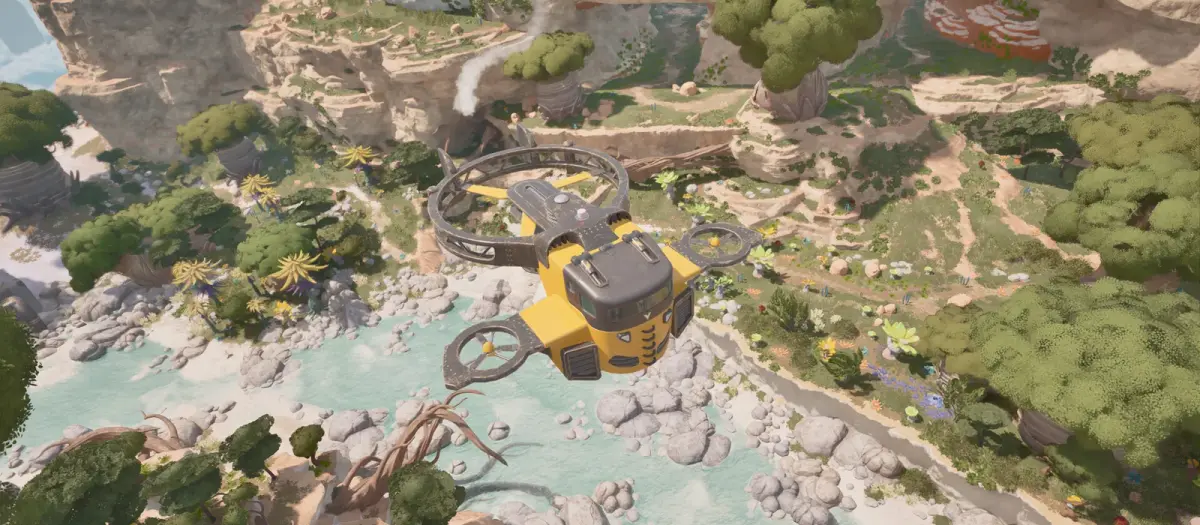
Early Access footage from Tycos. Screenshots: Apog Labs / SHUEISHA GAMES.
FAQ
How many regions are in Early Access? Two of the three. The third, Rime, is planned for a later update.
Is the map procedurally generated? The major islands and story sites are authored; the small islets between them are generated.
Can I fly to the upper layer at launch? No. Rime is not part of the launch build.
Is there fast travel? No fast travel is documented. Cruise control and waypoints reduce the tedium of long flights.
Where should I build my first camp? In Caligo Cays, near Pearl Island, close to water and a geyser, with a clear landing approach.
Sources
- ATMOSFAR on Steam — store description, system requirements and Early Access notes.
- ATMOSFAR Steam news hub — patch notes and developer posts.
- ATMOSFAR official site — Apog Labs announcements and media.
Related reading: ATMOSFAR Resources Guide: Every Material and Source and ATMOSFAR Beginner Guide: Your First Hours on Tycos.
Source note: mechanics and figures in this guide follow the Early Access build available on 30 October 2026, cross-checked against the ATMOSFAR Steam page and Apog Labs developer posts.
More ATMOSFAR Guides
How crafting works in ATMOSFAR: crafting table, research desk unlocks, blueprint sources, material processing and the order to build tools and ship parts.
The animals, plantimals and machines that end ATMOSFAR runs: Screechers, Blisterbacks, Traproots, PACE drones and AA turrets, with counters for each.
The ATMOSFAR Early Access roadmap: Vagabond, Rime, Blue Side and Singularity updates, the Scout Wasp, the third region, 1.0 timing and launch content.
Find ATMOSFAR hydrogen crystals near geysers, harvest them safely, haul them with the Hauler and turn them into liquid hydrogen before your Wasp runs dry.
Run an ATMOSFAR hydrogen refinery without draining your camp: power draw, cold storage at -253°C, field vs ship refining, siphon top-ups and common failures.
ATMOSFAR released on 29 October 2026 in Steam Early Access at $24.99, with a 10% launch discount to $22.49. Platforms, editions and what comes next.
A practical map of ATMOSFAR resources: scrap, circuit boards, hydrogen crystals, wood, food, water, artefacts and cores, with where to look for each.
An honest ATMOSFAR Early Access review: ship-building is excellent, the survival loop is coherent, and the launch build is still rough. Buy or wait?