
ATMOSFAR Creatures and Hazards: A Field Guide
The animals, plantimals and machines that end ATMOSFAR runs: Screechers, Blisterbacks, Traproots, PACE drones and AA turrets, with counters for each.
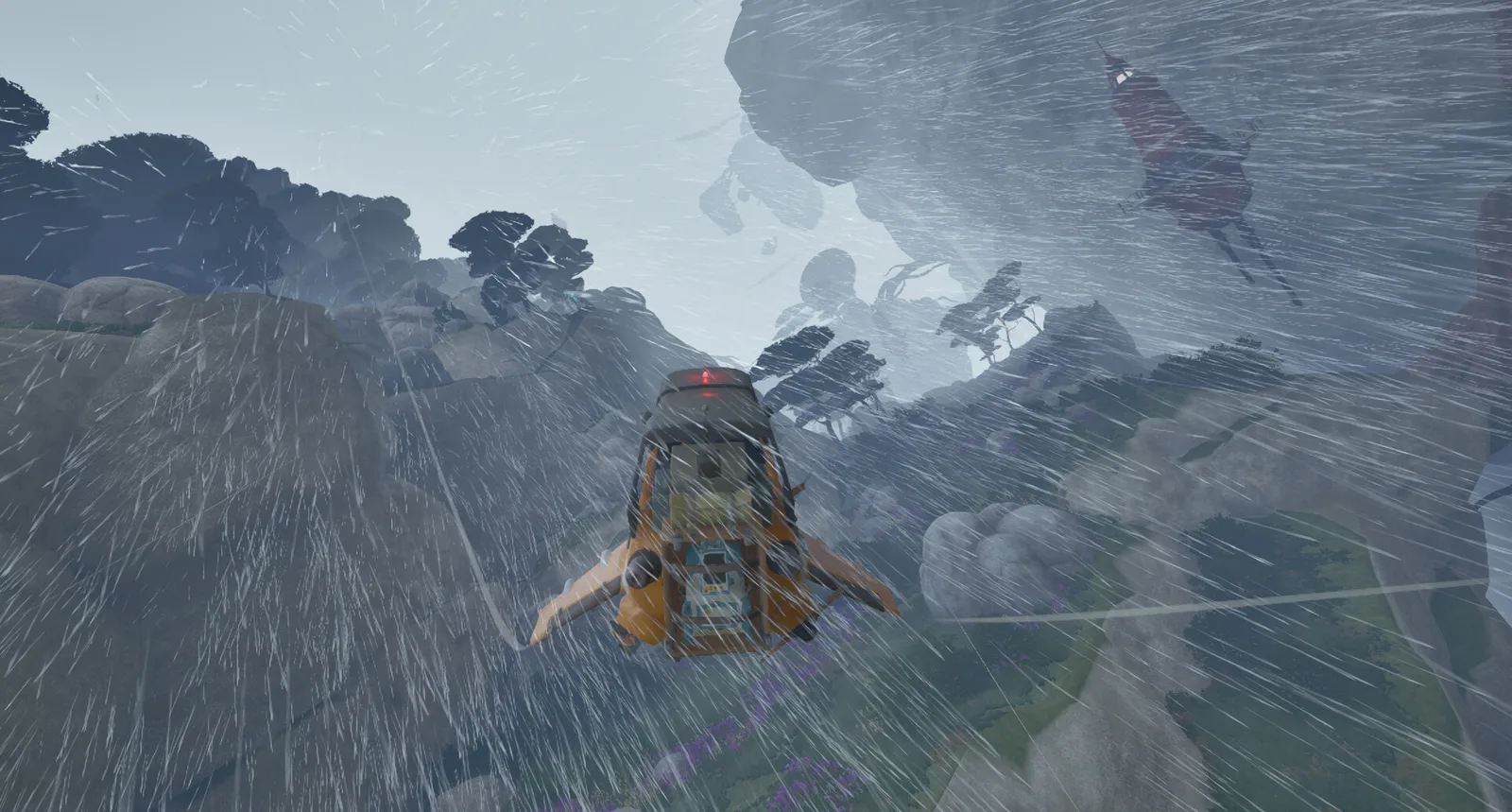
The dangerous things on Tycos are not all animals. Screechers own the air, Blisterbacks and Traproots guard the ground, and PACE drones and AA turrets are still fighting a war that ended years ago. Carry a stunner, fly high, and never assume a quiet island is empty.
ATMOSFAR's wildlife is part of the survival loop: food, materials and danger in the same package. The machines are worse, because they do not need to eat and they do not forget their orders.
Threat overview
| Threat | Type | Where | Counter |
|---|---|---|---|
| Screecher | Aggressive flyer | Open sky, cliffs, nests | Fly high, use Striker, avoid nests |
| Blisterback | Defensive plantimal | Lush ground, brush | Keep distance, stun, harvest after |
| Traproot | Ambush plantimal | Vegetated ground | Watch the ground, probe with stuns |
| Mawk | Wildlife | Starting islands | Usually avoidable; do not corner |
| PACE guard drones | Machine | PACE facilities | Stun, then extract before reboot |
| AA turrets | Fixed defence | PACE sites | Do not fly close; approach on foot |
| Weather | Environment | Between layers | Land, wait, do not fly in storms |
Screechers
Screechers are the reason you learn to look up. They are aggressive flying creatures — the renamed Batgulls from the alpha — and they attack from above, which is the worst angle for a pilot.
What works:
- Altitude is not safety. They fly; climbing does not leave them behind.
- The Striker is the answer. Its acceleration and turret make it the only Wasp that can fight back properly.
- Do not hover over a nest. If the sky fills with birds, leave the area rather than defend a spot.
- On foot, use cover. A cave mouth or a dense canopy breaks their approach.
Screechers are also a resource: their remains are organic material. Harvest after the flock disperses, not during.
Blisterbacks
Blisterbacks — formerly called Bombardiers — are plantimals: creatures that look like vegetation until they are not. They are defensive rather than predatory, and they punish players who walk into brush without looking.
Practical approach:
- Scan before you harvest. A plant that is slightly too regular is usually a Blisterback.
- Keep distance. Their defence is close-range.
- Stun first. A stunner gives you a window to move or harvest.
- Do not fight them next to your camp. The commotion attracts other threats.
Traproots
Traproots — formerly Venus Flytraps — are ambush predators disguised as ground cover. They are the reason to watch your feet in the lush lower region.
- Walk around suspicious clusters of leaves.
- Probe with a stun or a thrown item before stepping in.
- If you are caught, move immediately; standing still is what the trap wants.
- Harvest them carefully; they are a source of organic material.
Mawk and other wildlife
Mawk is one of the first creatures you meet near the starting islands. It is wildlife, not a boss: avoid cornering it, and do not treat every animal as a resource node.
Other wildlife includes Larkers and the occasional passive grazer. The general rule: if it is not attacking, leave it alone until you need the materials. Every fight costs ammo, fuel or hull.
PACE guard drones
PACE's security drones still patrol the old facilities. They are machines, so they do not tire, and they do not negotiate.
The intended loop:
- Stun the drone with a stunner or a Striker's turret.
- Extract it with the handheld extractor before it reboots.
- Take the components — circuit boards and machine parts are valuable.
- Disable the spawner if the site has one, or leave and come back later.
Do not try to out-shoot a drone with a hand tool. The stun window is the whole fight.
AA turrets
AA turrets are fixed emplacements with effectively unlimited ammunition and proximity fuses. They are the single deadliest thing to a small Wasp.
- One burst can destroy a Utility or a light craft.
- They do not run out of ammo. Waiting them out does not work.
- Approach on foot once you are outside their arc.
- Mark them with the spotting scope so your crew knows the no-fly zone.
- Do not fly a Hauler through a turret arc just because the route is shorter.
If a site is defended by AA, the correct play is usually to land short, walk in, and save the flying for the trip home.
Weather as a hazard
The weather is not decoration:
- Thunderstorms make flying risky and mining at a gas vent worse.
- Fog hides terrain and other craft.
- Jet streams push a heavy ship off course.
- The buzzing anomaly interferes with electronics. When the sky hums, land and wait.
A storm is not a challenge to overcome. It is a scheduled pause.
A survival kit for hostile ground
- Stunner — the most useful tool in the game against both animals and drones.
- Flare gun — light, signalling and a distraction for animals.
- Welder — repairs after a fight or a bad landing.
- Striker — air cover if you are working near nests.
- Camp Hub with a charged battery — a place to recover and recharge.
Early Access footage from Tycos. Screenshots: Apog Labs / SHUEISHA GAMES.
FAQ
What is the most dangerous creature? Screechers, because they attack the vehicle you depend on. AA turrets are the most dangerous thing overall.
Can you tame creatures? No taming system has been announced.
Are plantimals harvestable? Yes, after they are disabled. They are an organic material source.
Do creatures attack your ship? Some can damage a parked Wasp or a camp. Park with cover and keep a turret on the camp.
Will creature names change? They already have — Batgull became Screecher, Bombardier became Blisterback. Use the current names and expect Early Access revisions.
Sources
- ATMOSFAR on Steam — store description, system requirements and Early Access notes.
- ATMOSFAR Steam news hub — patch notes and developer posts.
- ATMOSFAR official site — Apog Labs announcements and media.
Related reading: ATMOSFAR Beginner Guide: Your First Hours on Tycos and ATMOSFAR Map and Regions: Tycos and the Sky Layers.
Source note: mechanics and figures in this guide follow the Early Access build available on 30 October 2026, cross-checked against the ATMOSFAR Steam page and Apog Labs developer posts.
More ATMOSFAR Guides
How crafting works in ATMOSFAR: crafting table, research desk unlocks, blueprint sources, material processing and the order to build tools and ship parts.
The ATMOSFAR Early Access roadmap: Vagabond, Rime, Blue Side and Singularity updates, the Scout Wasp, the third region, 1.0 timing and launch content.
Find ATMOSFAR hydrogen crystals near geysers, harvest them safely, haul them with the Hauler and turn them into liquid hydrogen before your Wasp runs dry.
Run an ATMOSFAR hydrogen refinery without draining your camp: power draw, cold storage at -253°C, field vs ship refining, siphon top-ups and common failures.
How the ATMOSFAR map works: the floating layers of Tycos, where Caligo Cays sits, what Early Access includes and how to navigate without a full map.
ATMOSFAR released on 29 October 2026 in Steam Early Access at $24.99, with a 10% launch discount to $22.49. Platforms, editions and what comes next.
A practical map of ATMOSFAR resources: scrap, circuit boards, hydrogen crystals, wood, food, water, artefacts and cores, with where to look for each.
An honest ATMOSFAR Early Access review: ship-building is excellent, the survival loop is coherent, and the launch build is still rough. Buy or wait?