
ATMOSFAR Co-op and Multiplayer Guide: Playing as a Crew
How ATMOSFAR multiplayer works: four-player online co-op, crew roles, sharing the Cloud Cruiser, keeping camp running and mistakes that sink runs.
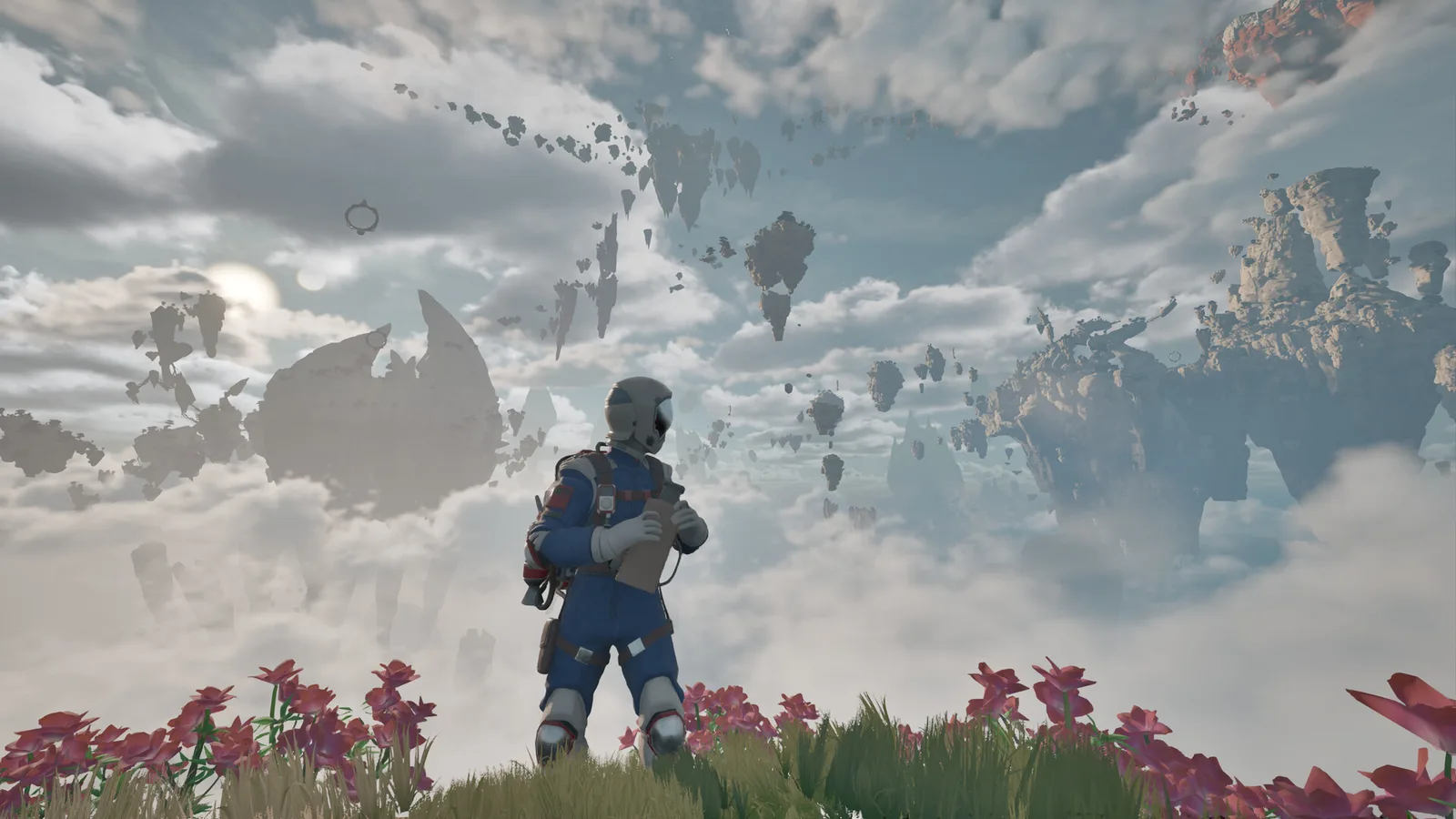
ATMOSFAR supports four-player online co-op on PC. The crew shares a Cloud Cruiser, and the game is at its best when each player owns a role: pilot, engineer, salvager and scout. Without roles, four people do one person's job and the ship starves.
ATMOSFAR is a survival game about keeping a flying base alive. That design makes co-op more than a damage multiplier: it turns the ship into a small organisation. A good crew divides labour. A bad crew argues about who took the last fuel canister.
What the game supports
- Online co-op for up to four players.
- Single-player is fully supported; the game does not require a crew.
- PC only at Early Access launch, through Steam. There is no crossplay question because there is no console version yet.
- No split-screen or local co-op has been announced.
- No dedicated server option has been announced. Co-op is organised through Steam.
If you are choosing between solo and co-op, start solo for an hour. The fuel and power loops are easier to learn when nobody is waiting for you to build a reactor.
The four roles
1. Pilot
Owns the Cloud Cruiser's helm, route planning and fuel state. The pilot decides where the ship parks, which is the single most consequential decision in a session.
- Keeps the tanks above a quarter.
- Plans approaches into wind and away from AA turrets.
- Calls the landing before anyone jumps out.
2. Engineer
Owns the reactor, lift, refineries and repairs.
- Watches power draw and lift warnings.
- Keeps the refinery fed and the tanks cold.
- Repairs hull damage before it becomes a fuel leak.
3. Salvager
Owns the Hauler and the material processor.
- Marks large wreckage.
- Lifts it to the ship without overloading the crane.
- Processes it and sorts blueprints and artefacts.
4. Scout
Owns the Striker, the spotting scope and the risk assessment.
- Finds geysers, PACE sites and safe landing zones.
- Clears animals and stuns drones.
- Warns the crew about weather and turret arcs.
With four players, this is close to ideal. With two, combine pilot/engineer and salvager/scout. With three, the engineer can also salvage.
The shared ship
The Cloud Cruiser is designed for a crew. The development blogs describe it as a mobile base that accommodates the whole team and its Wasp fleet, with living space, Wasp pads, refining and research.
Practical rules for a shared ship:
- One owner per system. Two people refuelling the same tank is how fuel gets spilled.
- Give everyone a bunk or a room. It reduces friction and the game explicitly supports interior building.
- Label storage. A trunk for food, a trunk for ship parts, a trunk for artefacts. Unlabelled storage becomes a communal junk drawer.
- Agree on the build plan before placing hull parts. Moving a wall is cheap; rebuilding the power spine is not.
- Do not expand the ship while the pilot is flying. Hull changes affect weight and lift.
The shared camp
A field camp is the crew's forward base. It needs the same discipline as the ship, with one addition: the camp keeper.
- The Utility Wasp carries the Camp Hub, so the camp keeper is usually the Utility pilot.
- The hub distributes power; decide which devices stay on overnight.
- Pack up before a region move; a dead camp is worse than no camp.
- In co-op, one player should be able to pack the whole camp if the others are away.
Communication that matters
ATMOSFAR's systems are visual and audible, but a crew still needs words. The four calls that prevent most disasters:
- "Landing." Before the ship sets down, so nobody is standing under it.
- "Tanks at quarter." Before the pilot commits to a long leg.
- "Overweight." When a Hauler or the ship is at its lift limit.
- "Turret." When an AA emplacement is in range.
If you are playing without voice chat, agree on a text shorthand before you start. The game does not pause for a discussion.
Scaling and difficulty
The game supports solo and four-player crews, but it does not publish a difficulty-scaling table. Treat co-op as a logistics multiplier rather than a combat multiplier:
- More players means more fuel consumption, more Wasp traffic and more mouths to feed.
- More players also means faster construction, parallel salvage and a second pair of eyes on weather.
- A four-player crew that does not assign roles is slower than a solo player with a plan.
If the session feels chaotic, cut the crew size or assign one player as the decision-maker for routes and builds.
Common co-op failure modes
| Failure | Cause | Fix |
|---|---|---|
| Ship stranded with empty tanks | Everyone assumed someone refuelled | Pilot owns fuel; call the level |
| Camp dead by morning | Refinery left running on a small battery | Engineer sets an overnight loadout |
| Wasp abandoned on an island | No one marked the site | Scout waypoints every landing |
| Arguments over the hull | No agreed layout | Sketch the layout before building |
| Player left behind | Ship departed without a headcount | Count before takeoff |
Joining and troubleshooting
- Co-op is hosted through Steam. Invite from your friends list and confirm the join before the host loads a save.
- If a join fails, both players should restart Steam and verify the game files. Early Access networking is still being stabilised.
- Keep the crew on the same game version. A patch on one machine and not another is the most common connection problem.
- If performance drops in a four-player session, lower settings before blaming the network.

Early Access footage from Tycos. Screenshots: Apog Labs / SHUEISHA GAMES.
FAQ
How many players can play ATMOSFAR? Up to four in online co-op.
Is there crossplay? There are no console versions at launch, so crossplay is not applicable yet. PC players play together through Steam.
Can two players share one Wasp? Yes, the Utility carries a passenger comfortably. Combat craft are not designed as transports.
Does progress carry between sessions? The host's world persists. Treat the host as the owner of the save and agree on a schedule.
Is co-op harder? It is busier, not necessarily harder. Roles make it easier; a disorganised crew makes it much harder.
Sources
- ATMOSFAR on Steam — store description, system requirements and Early Access notes.
- ATMOSFAR Steam news hub — patch notes and developer posts.
- ATMOSFAR official site — Apog Labs announcements and media.
Related reading: ATMOSFAR Beginner Guide: Your First Hours on Tycos and ATMOSFAR Cloud Cruiser Guide: Build, Power and Modules.
Source note: mechanics and figures in this guide follow the Early Access build available on 30 October 2026, cross-checked against the ATMOSFAR Steam page and Apog Labs developer posts.
More ATMOSFAR Guides
The animals, plantimals and machines that end ATMOSFAR runs: Screechers, Blisterbacks, Traproots, PACE drones and AA turrets, with counters for each.
The ATMOSFAR Early Access roadmap: Vagabond, Rime, Blue Side and Singularity updates, the Scout Wasp, the third region, 1.0 timing and launch content.
Find ATMOSFAR hydrogen crystals near geysers, harvest them safely, haul them with the Hauler and turn them into liquid hydrogen before your Wasp runs dry.
Run an ATMOSFAR hydrogen refinery without draining your camp: power draw, cold storage at -253°C, field vs ship refining, siphon top-ups and common failures.
How the ATMOSFAR map works: the floating layers of Tycos, where Caligo Cays sits, what Early Access includes and how to navigate without a full map.
ATMOSFAR released on 29 October 2026 in Steam Early Access at $24.99, with a 10% launch discount to $22.49. Platforms, editions and what comes next.
A practical map of ATMOSFAR resources: scrap, circuit boards, hydrogen crystals, wood, food, water, artefacts and cores, with where to look for each.
An honest ATMOSFAR Early Access review: ship-building is excellent, the survival loop is coherent, and the launch build is still rough. Buy or wait?