
ATMOSFAR Resources Guide: Every Material and Source
A practical map of ATMOSFAR resources: scrap, circuit boards, hydrogen crystals, wood, food, water, artefacts and cores, with where to look for each.
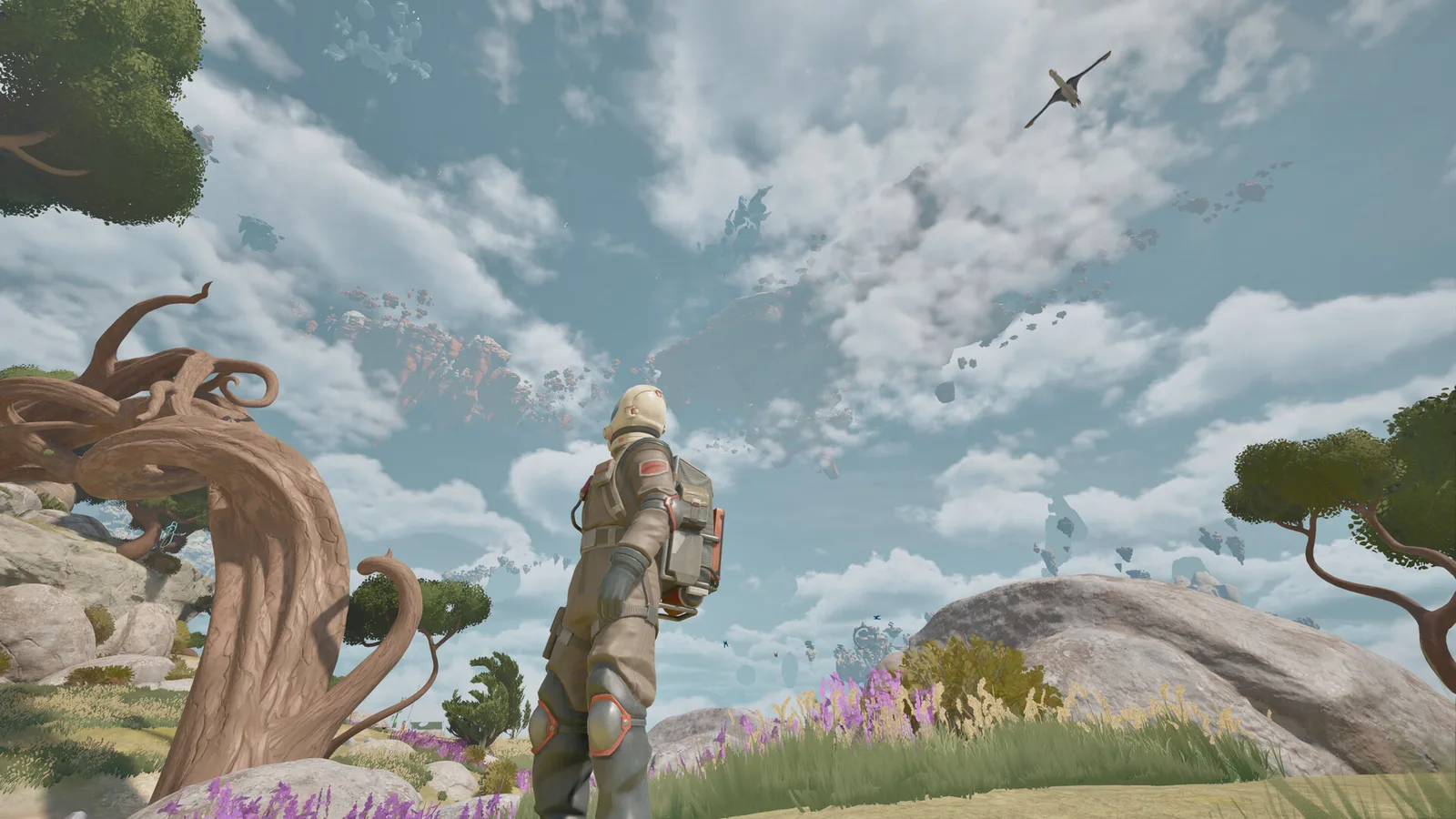
ATMOSFAR's materials split into four families: salvage from PACE, hydrogen from geysers, organics from the lush lower islands, and artefacts from guarded sites. Build a route that touches all four, and you stop making emergency trips.
ATMOSFAR does not have a tidy ore tree. Its resources come from the wreckage of a lost colony, the biology of floating islands, and the gas that keeps those islands in the sky. This guide is the index: what each material is for, where it comes from, and which vehicle you need to move it.
The four resource families
| Family | Examples | Source | Main use |
|---|---|---|---|
| Salvage | Structural scrap, pipes, panels, circuit boards | PACE facilities, wrecks, debris fields | Construction, tools, ship modules |
| Hydrogen | Hydrogen crystals, liquid hydrogen | Geysers, refineries | Fuel for Wasps and ship thrust |
| Organics | Wood, fruit, berries, seeds, plant fibre | Lower lush islands | Food, medicine, plant beds, crafting |
| Knowledge | Artefacts, research drives, blueprints, cores | PACE sites, story locations | Research unlocks, reactor power, story |
Every build chain draws from at least two families. A Wasp upgrade needs salvage and hydrogen. A plant bed needs salvage and organics. A reactor needs a core from the knowledge family and a hull of salvage around it.
Salvage: the bulk material
Salvage is the most-used resource in the game and the one you will spend the most time collecting.
- Structural scrap — hull sections, industrial tanks, machinery. Needs the material processor; moves by Hauler.
- Loose scrap — panels, pipes, brackets. Handheld extractor; backpack.
- Circuit boards — the electronics bottleneck. Found in PACE facilities and abandoned camps.
- Reactor cores — rare, heavy, radioactive. Hauler only.
The full salvage loop is in the scrap guide.
Where to look first
- The tutorial facility on Pearl Island — safe, guided, and full of starter material.
- Abandoned camps near your first landing sites.
- PACE facilities once you can handle drones.
- Debris fields once you own a Hauler.
Hydrogen: the fuel family
Hydrogen crystals form around geysers and convert to liquid hydrogen at a refinery. Without this chain, nothing flies.
- Hydrogen crystals — pale deposits at vent sites; mine with the extractor.
- Liquid hydrogen — refinery output; stored at -253°C; burns in Wasp engines and ship thrusters.
See hydrogen crystals and the refinery guide.
Organics: food and growth
The lower, wetter islands — the Caligo Cays where the game begins — are dense with life.
- Wood — from the giant trees and brush; used in camp structures and some craftables.
- Fruit and berries — food and temporary buffs; cook them at a campfire.
- Seeds — planted in ship plant beds, not in the ground.
- Plant fibre and other organics — crafting inputs for cloth, filters and consumables.
- Water — rain pools and streams; drinkable.
Organics are the easiest resources to ignore and the first ones to run out on a long expedition. A plant bed turns a handful of seeds into a renewable food supply, which is why it belongs in the first wave of ship modules.
Knowledge: artefacts, drives and cores
PACE left more than metal.
- Artefacts — researched at the research desk to unlock new craftables.
- Research drives — story and progression items found in facilities; the launch patch notes mention a bug where they could be lost, so handle them carefully.
- Blueprints — found inside large scrap processed by the material processor.
- Clues and historical remains — story fragments; they explain what happened to the colony.
- Reactor cores — the rarest power source; heavy, radioactive, and required for serious ship expansion.
Knowledge resources are the reason to explore rather than farm. A route that only collects scrap will stall at the research gate.
A route that covers all four
An efficient day in ATMOSFAR looks like this:
- Leave the ship near a geyser. Mine crystals while the refinery runs.
- Fly the Utility to a nearby abandoned camp. Strip loose scrap and circuit boards.
- Walk into the PACE site. Stun drones, take artefacts, mark large pieces.
- Return with the Hauler. Lift structural scrap to the ship's processor.
- Process, research, plant. Spend the evening turning loot into unlocks and food.
The pattern repeats at every region: fuel at the vent, bulk at the wreck, knowledge at the guarded site, food at the trees.
Storage and weight
- Backpack: limited slots, plus a battery and life support. Keep two slots free for discoveries.
- Camp trunk: good for local stock; not accessible from the ship.
- Ship storage: the right place for materials you will use across sessions.
- Hauler cargo slots: for the heavy, awkward pieces; do not treat them as long-term storage.
Weight is the hidden resource. Every kilogram of scrap you carry is lift the ship has to produce. Process raw scrap into materials before a long flight, and dump low-value bulk when the hold is full.
What not to hoard
- Pipes and basic panels once you have a steady salvage route.
- Duplicate artefacts after research is complete.
- Raw crystal if you have refinery capacity; carry liquid fuel instead.
- Anything you cannot process yet — mark the site and come back with the right tool.
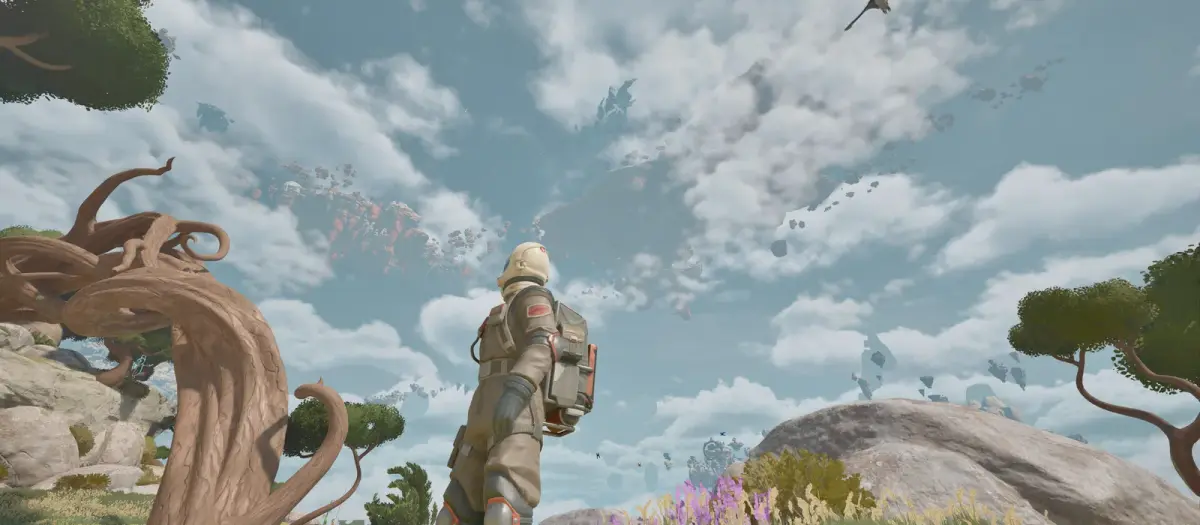
Early Access footage from Tycos. Screenshots: Apog Labs / SHUEISHA GAMES.
FAQ
What is the rarest resource? Reactor cores. They are heavy, radioactive and needed for every serious power upgrade.
Can I grow food on an island? No. Seeds go into plant beds on the Cloud Cruiser.
Is water safe to drink? Yes, standing water is drinkable.
Do resources respawn? Not documented for Early Access. Treat sites as finite and plan routes.
What should I research first? Whatever unlocks the next tier of your bottleneck: refinery and tank upgrades if fuel is the problem, processor and storage if salvage is.
Sources
- ATMOSFAR on Steam — store description, system requirements and Early Access notes.
- ATMOSFAR Steam news hub — patch notes and developer posts.
- ATMOSFAR official site — Apog Labs announcements and media.
Related reading: ATMOSFAR Scrap Guide: Wrecks, Debris Fields and Salvage and ATMOSFAR Hydrogen Crystals: Where to Find and How to Use.
Source note: mechanics and figures in this guide follow the Early Access build available on 30 October 2026, cross-checked against the ATMOSFAR Steam page and Apog Labs developer posts.
More ATMOSFAR Guides
How crafting works in ATMOSFAR: crafting table, research desk unlocks, blueprint sources, material processing and the order to build tools and ship parts.
The animals, plantimals and machines that end ATMOSFAR runs: Screechers, Blisterbacks, Traproots, PACE drones and AA turrets, with counters for each.
The ATMOSFAR Early Access roadmap: Vagabond, Rime, Blue Side and Singularity updates, the Scout Wasp, the third region, 1.0 timing and launch content.
Find ATMOSFAR hydrogen crystals near geysers, harvest them safely, haul them with the Hauler and turn them into liquid hydrogen before your Wasp runs dry.
Run an ATMOSFAR hydrogen refinery without draining your camp: power draw, cold storage at -253°C, field vs ship refining, siphon top-ups and common failures.
How the ATMOSFAR map works: the floating layers of Tycos, where Caligo Cays sits, what Early Access includes and how to navigate without a full map.
ATMOSFAR released on 29 October 2026 in Steam Early Access at $24.99, with a 10% launch discount to $22.49. Platforms, editions and what comes next.
An honest ATMOSFAR Early Access review: ship-building is excellent, the survival loop is coherent, and the launch build is still rough. Buy or wait?